New Districts in Ladakh: A Step Forward, But Questions Remain
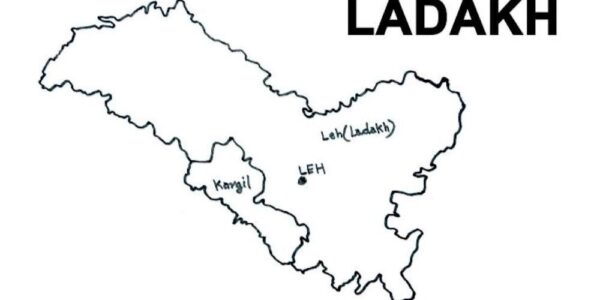
The recent announcement of five new districts in Ladakh has marked a significant administrative development in the Union Territory. According to a report published by The Statesman, the Lieutenant Governor approved the appointment of Deputy Commissioners (DCs) and Superintendents of Police (SPs) for the newly created districts—Nubra, Sham, Changthang, Zanskar, and Drass—ensuring that administrative functioning begins without delay.
At the outset, it is important to acknowledge and congratulate the people of regions whose long-standing demands for district status have finally been met. At the same time, there is a need to recognise the concerns of communities whose aspirations remain unaddressed.
Lack of Transparency in District Formation
While the Union Home Minister had earlier announced the creation of new districts, the criteria and framework used for their formation were never clearly communicated to the public. This lack of transparency has raised valid concerns.
For instance, Sankoo—one of Ladakh’s significant subdivisions—has long demanded district status based on factors such as population, geography, and administrative viability. Despite protests and public appeals, Sankoo continues to remain within Kargil district, alongside Shakar Chiktan, leaving residents questioning the basis of the final decision.
Imbalance in Administrative Distribution
Data on revenue villages further highlights the imbalance. As per official figures, Kargil district continues to have around 80 revenue villages, the highest among all districts, accounting for nearly one-third of Ladakh’s total. In comparison, districts like Drass and Changthang have significantly fewer villages.
This raises a fundamental question: how does such an uneven distribution align with the vision of a “prosperous and developed Ladakh”? Without clarity on administrative restructuring and financial allocation, the long-term effectiveness of these new districts remains uncertain.
There is an urgent need for the administration to outline a transparent framework that ensures equitable distribution of resources, including a proportionate share of the central budget based on population and administrative load.
Infrastructure and Governance Gaps
The creation of districts goes far beyond appointing DCs and SPs. Effective governance requires a robust administrative ecosystem—district headquarters, government offices, police infrastructure, healthcare facilities, schools, and public service institutions.
At present, many of these newly announced districts lack basic infrastructure. The roadmap for developing these essential services has not been clearly communicated to the public. Without a structured implementation plan, there is a risk that the transition may lead to administrative inefficiencies and public hardship in the short term.
Concerns Over Representation and Public Participation
The broader political context of Ladakh cannot be ignored. Recent protests demanding Sixth Schedule safeguards, statehood, and job security reflect deeper concerns about representation and autonomy.
With only one Member of Parliament representing the region, many voices already feel underrepresented at the national level. In such a scenario, major administrative decisions—like district reorganisation—must involve wider public consultation.
Development is welcome, but it must be inclusive, transparent, and participatory. Policies imposed without adequate dialogue risk alienating the very communities they intend to serve.
The Way Forward
The creation of new districts is an opportunity to strengthen governance and bring administration closer to the people. However, its success will depend on careful planning, equitable resource allocation, and sustained engagement with local stakeholders.
There is no urgency that justifies bypassing consultation. Citizens—including students, academics, and civil society—must actively engage in discussions around Ladakh’s future. Constructive dialogue, rather than unquestioned acceptance, will ensure that development is both meaningful and sustainable.
2 Comments
Leave a Reply
Very well articulated, Younus
Creating a district is more than just a name change and appointing a DC or SP. Without a clear roadmap for building schools, hospitals, and headquarters in these remote areas, we risk creating ‘paper districts’ that offer no real improvement in the daily lives of Ladakhis.