From Climate Innovator to Political Prisoner: The Sonam Wangchuk Affair
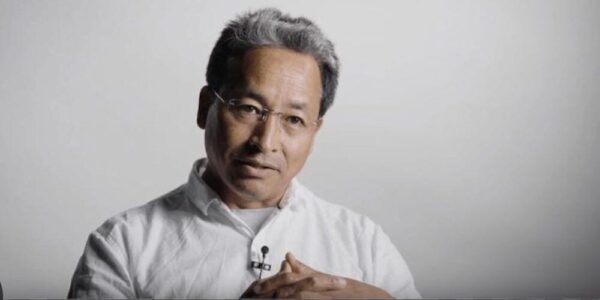
The arrest and eventual release of Sonam Wangchuk has become a revealing
episode in India’s evolving relationship with dissent. What began as a campaign for
environmental protection and constitutional safeguards in Ladakh ended with a
globally recognized climate innovator spending nearly six months in jail under a
national security law.
For observers of South Asian politics, the affair offers a window into a broader
tension between centralized governance and regional demands for autonomy in
post-2019 India.
The Political Context
The roots of the Ladakh protests lie in the 2019 restructuring of Jammu and Kashmir
following the Revocation of Article 370. The move split the former state into two
Union Territories – Jammu and Kashmir and Ladakh – both governed directly by
New Delhi.
Initially, many Ladakh residents supported the decision. But concerns soon emerged
about the absence of a legislative assembly and the lack of constitutional protections
for local communities.
Demographic realities partly explain the anxiety. According to the 2011 Census of
India, Ladakh has a population of around 274,000 people, and according to data
from the Office of the Registrar General and Census Commissioner of India, roughly
79 percent of the population belongs to Scheduled Tribes. Local civil society groups
often cite higher estimates—sometimes above 90 percent—to emphasize the
region’s overwhelming tribal composition.
Because of this, Ladakhi organizations have demanded inclusion under the Sixth
Schedule of the Constitution of India, which grants autonomous administrative and
legislative powers to tribal regions in northeastern India. According to reporting by
Mongabay India and policy analyses cited in environmental research, activists argue
such protections are necessary to safeguard Ladakh’s fragile mountain ecosystem
and traditional land rights.
A Protest Movement Takes Shape
Wangchuk became the most visible face of this movement. Known internationally for
his work in education and climate innovation, he developed projects such as “ice stupas,” artificial glaciers designed to help Himalayan communities store water
during winter and use it during increasingly dry summers.
His reputation extended beyond activism. His life and work inspired a character in
the film 3 Idiots, which brought his story to millions of Indian viewers.
In September 2025 Wangchuk launched a hunger strike demanding statehood and
Sixth Schedule protections for Ladakh. According to official statements from the Press Information Bureau, the fast began on 10 September 2025 and quickly gained national attention.
But the situation soon deteriorated.
Violence and Detention
On 24 September 2025, protests in Leh escalated into clashes between
demonstrators and security forces. According to reporting by Reuters and several
Indian newspapers, four civilians were killed and more than 80 people were injured,
including police personnel.
Authorities imposed curfews and suspended mobile internet services across parts of
Ladakh.
Two days later, Wangchuk was arrested under the National Security Act, which
allows authorities to detain individuals without trial if they are considered a threat to
public order or national security.
According to reporting by The Indian Express and The Times of India, Wangchuk
was detained on 26 September 2025 and transferred to Jodhpur, where he remained
in custody for approximately 170 days.
Preventive detention laws have long been controversial in India. According to
statistics reported by the National Crime Records Bureau, thousands of individuals
across the country are held under preventive detention laws every year.
Civil liberties organizations have frequently argued that such laws allow authorities to
jail individuals without formal charges, raising concerns about their use against
political dissenters.
A Sudden Release
In March 2026, the Indian government revoked Wangchuk’s detention order, leading
to his release after nearly six months in jail. According to reports by The Economic
Times and other Indian media outlets, officials said the decision was taken to restore
normalcy and allow dialogue in Ladakh.
Yet the broader political questions remain unresolved.
Ladakh still lacks a legislative assembly, and the region’s demand for Sixth Schedule
protections remains under discussion.
Strategic Sensitivities
For New Delhi, Ladakh is not just another administrative region. It occupies a
strategically sensitive position along India’s disputed borders with China and
Pakistan.
Since the 2020 China–India border clashes, the region has taken on heightened
strategic importance. This partly explains why the central government tends to view
political unrest there through a national security lens.
However, the Wangchuk episode also demonstrates the risks of addressing political
grievances primarily through law-and-order measures.
A Test for India’s Democracy
India often describes itself as the world’s largest democracy. But democracy is not
measured only by elections. It is also measured by how governments respond when
citizens challenge authority.
The demands raised by Ladakh’s activists—statehood, constitutional safeguards and
environmental protections—are fundamentally political questions. Addressing them
will require negotiation and institutional reform rather than prolonged confrontation.
The story of Sonam Wangchuk ultimately reflects a deeper challenge facing modern
India: balancing national security, regional autonomy and democratic dissent.
For a country that prides itself on democratic pluralism, how it resolves that
challenge will shape not only the future of Ladakh but also the credibility of India’s
democratic institutions.
Disclaimer: The views expressed in this article belong to the author and do not necessarily reflect the editorial policy of Voice of Ladakh.
0 Comments